Sandstone
The white bloom is not the problem. It is the evidence of the problem, and on sandstone it arrives with the stone coming apart behind it.
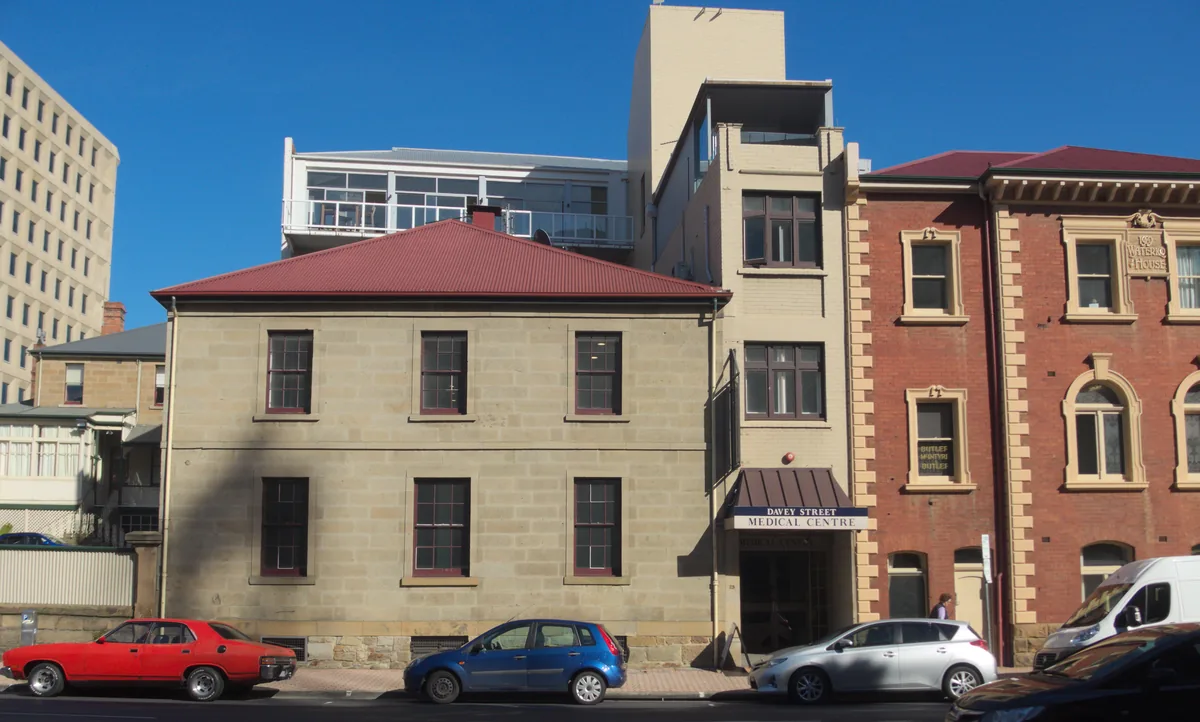
Hobart's older housing and much of its commercial fabric is sandstone, and sandstone handles rising damp worse than almost anything else it could have been built from. Rising Damp Hobart assesses and treats stone as well as brick, because the two need different treatment and a method meant only for brickwork can make a stone wall worse.
Groundwater is not pure — it carries dissolved salts, from the soil, from old mortars, and in some parts of Hobart from historic fill. The water travels up through the stone and evaporates at the face. The salt cannot evaporate, so it stays. As it crystallises it expands, and it does that inside the pores of the stone, just behind the surface. The pressure is small but it repeats every wetting and drying cycle, and sandstone is soft enough that eventually the face lets go.
Efflorescence. Salt that has made it to the surface and crystallised there. It brushes off, and it comes back. This stage is a warning, not damage.
The wall is wet and staying wet. On stone this is often less obvious than on painted plaster, which is part of why it goes unnoticed for years.
The face of the stone flaking, powdering or dishing inward. This is the damage stage — the salt is crystallising just under the surface and pushing it off.
Whole sections of face gone, mortar joints standing proud of the stone around them. At this point the repair is stone replacement or indenting, not cleaning.
Sealing the wall. A waterproof coating on the outside of a damp stone wall traps the moisture and moves the evaporation point further in and further up. The salt then crystallises deeper inside the stone instead of on its surface, which turns a cosmetic problem into a structural one. Sandstone needs to breathe.
Repointing in cement. Cement mortar is harder and less permeable than the stone around it. Water that would have left through the joint is forced to leave through the face of the stone instead, concentrating the salt damage exactly where you can see it. Lime mortar is used on these walls because it is softer than the stone and lets the joint take the wear rather than the block.
The same sequence as any other masonry — establish where the water comes from, correct levels and drainage, install a barrier if one is genuinely absent — with two additions. Contaminated plaster and any cement pointing generally have to come off, and the stone itself may need repointing in lime or, where the loss is deep, indenting with matched stone. That is conservation work rather than damp work, and on a significant building it may require Heritage Council approval before it starts.
We cover Hobart and the surrounding suburbs, from the Georgian cottages of Battery Point to the post-war brick of Glenorchy and Moonah.
We come out, meter the walls, look at the ground levels and tell you what is causing it. You get that in writing before we quote any repair. The visit is $450 plus GST.