West Hobart, TAS
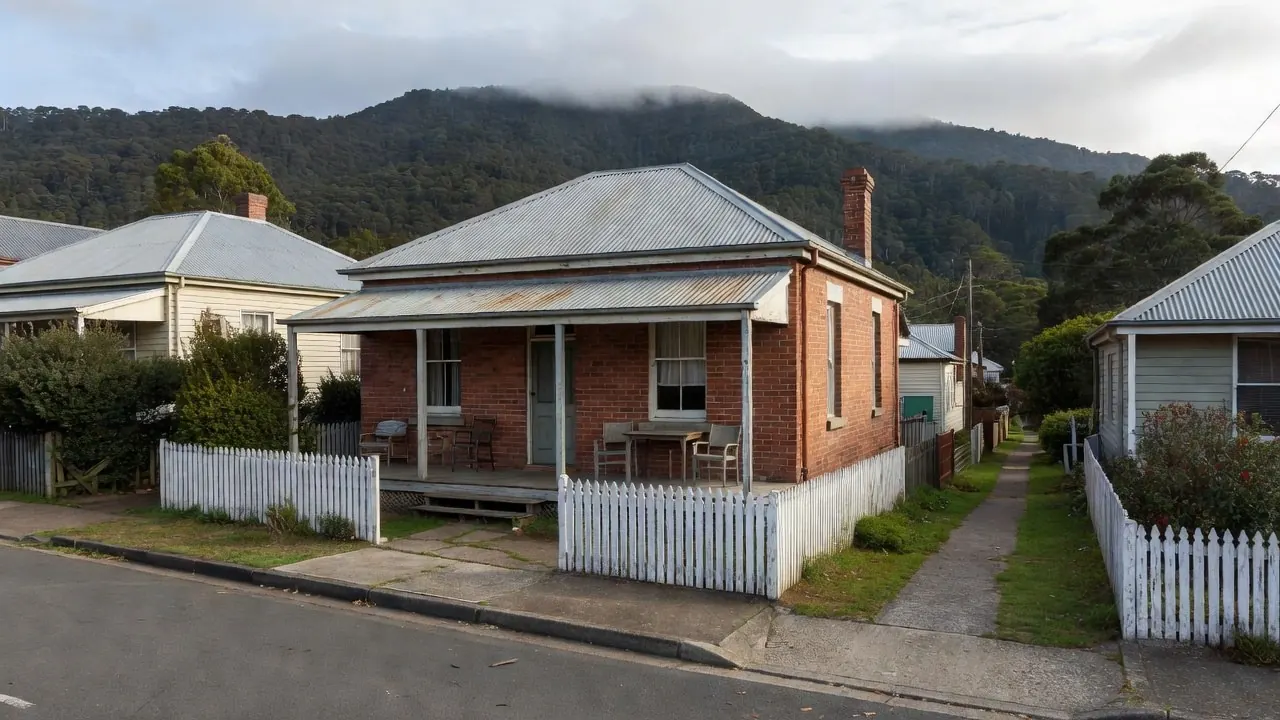
West Hobart: Victorian cottages on cut-and-fill blocks.
The main housing in West Hobart is 1870s–1920s Victorian and Federation, and Rising Damp Hobart meters those walls before we price any repair.
West Hobart rises behind the city. Its Victorian and Federation cottages sit on cut-and-fill blocks. That is the defining feature for damp here. A house on a cut has ground held against one side, whether or not anyone would call it a retaining wall. The damp that appears on that wall can be lateral rather than rising. A wall that gets little winter sun dries more slowly. We have not measured sun for any street, so check the wall itself. Some houses have both problems at once — a failed course on one side and lateral water entering through the retained wall. Those need separate treatment.
| Main housing | 1870s–1920s Victorian and Federation |
|---|---|
| Height above sea level | about 91 m |
| Height range within 250 m | about 71–117 m |
| Derwent estuary shore (salt water) | about 1.7 km away (straight line) |
| Centre of Hobart | about 1.4 km away (straight line) |
| Main roads near the centre | Hill Street, Arthur Street, Warwick Street and Mellifont Street |
| Named parks nearby | Caldew Park, John Doggett Park and Friends Park |
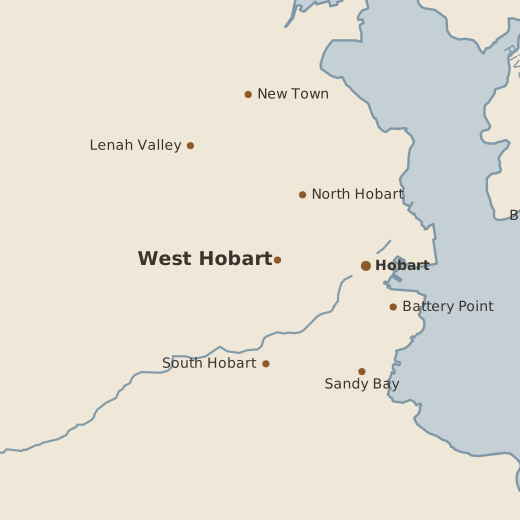
West Hobart's centre reads 91 m on the model, and the eight points 250 m out read 71 to 117 m. That 46 m spread is the widest of the suburbs with their own page on this site. The figure does not describe any one block. On a cut-and-fill block, the retained wall and the other walls are measured separately, because they can have different causes.
Prices are on the cost page and the measuring method is on the about page. Nearby: North Hobart, South Hobart, Battery Point, Sandy Bay.
We cover Hobart and the surrounding suburbs, from the Georgian cottages of Battery Point to the post-war brick of Glenorchy and Moonah.
We come out, meter the walls, look at the ground levels and tell you what is causing it. You get that in writing before we quote any repair. The visit is $450 plus GST.