Sandy Bay, TAS
Sandy Bay: Victorian and Federation, bridged courses to rule out.
The main housing in Sandy Bay is 1880s–1930s Victorian and Federation, and Rising Damp Hobart meters those walls before we price any repair.
Sandy Bay runs from grand Victorian and Federation homes near the water up to later brick further back. Where an older house still has its original damp course, in slate or tar paper, the fault to rule out first is a bridge, not a missing course. Paving, rendered plinths, raised garden beds and re-levelled driveways can all build a path for moisture around a course that is otherwise still working. The wall to check first is the one with the highest ground or paving against it.
| Main housing | 1880s–1930s Victorian and Federation |
|---|---|
| Height above sea level | about 21 m |
| Height range within 250 m | about 10–26 m |
| Derwent estuary shore (salt water) | about 0.4 km away (straight line) |
| Centre of Hobart | about 1.6 km away (straight line) |
| Main roads near the centre | Sandy Bay Road, Churchill Avenue, King Street and Regent Street |
| Named parks nearby | Osborne Park, Errol Flynn Reserve and Parliament Street Reserve |
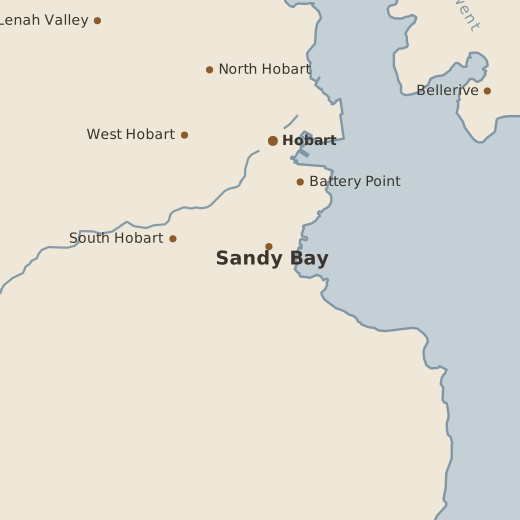
The centre of Sandy Bay is 0.4 km from the estuary shore, so the houses near the water can take wind-borne salt. A salted wall can look damp even when its course still works. If the fault is a bridged course, the cheap checks come first: paving and garden beds against the wall, and render carried down past the course.
Prices are on the cost page and the measuring method is on the about page. Nearby: Battery Point, South Hobart, West Hobart, North Hobart.
We cover Hobart and the surrounding suburbs, from the Georgian cottages of Battery Point to the post-war brick of Glenorchy and Moonah.
We come out, meter the walls, look at the ground levels and tell you what is causing it. You get that in writing before we quote any repair. The visit is $450 plus GST.