Glenorchy, TAS
Glenorchy: post-war brick near the Derwent.
The main housing in Glenorchy is 1940s–1970s brick and weatherboard, and Rising Damp Hobart meters those walls before we price any repair.
Glenorchy is mostly post-war housing near the Derwent. Houses of that age are more likely to have a damp course, so the causes to check are different. Where surface water drains slowly, it sits against footings for longer after rain. Decades of added concrete — paths, carports, extensions — can raise the outside level past the course. Weatherboard homes here can also show damp at the base of a masonry pier or chimney breast, with the walls unaffected. That is a much smaller job than it first looks.
| Main housing | 1940s–1970s brick and weatherboard |
|---|---|
| Height above sea level | about 20 m |
| Height range within 250 m | about 14–27 m |
| Derwent estuary shore (salt water) | about 0.9 km away (straight line) |
| Centre of Hobart | about 7.0 km away (straight line) |
| Main roads near the centre | Goodwood Road, Main Road, King George V Avenue and Elwick Road |
| Named parks nearby | Barry Reserve, Cairnduff Reserve and Windsor Street Park |
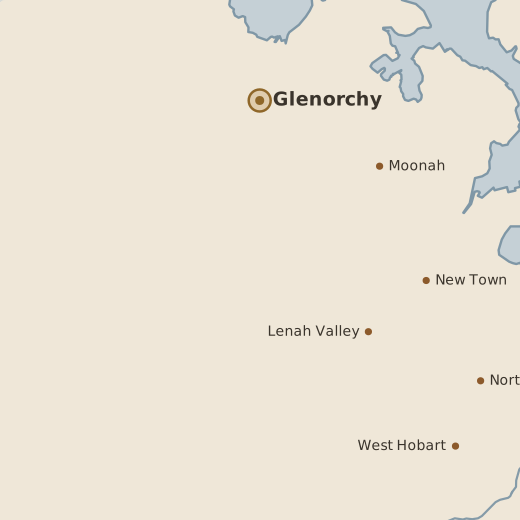
Glenorchy's centre is 0.9 km from the Derwent shore and 7.0 km from the city. That is nearer salt water than Moonah (1.1 km) but well back from Bellerive (0.2 km). Salt in the plaster could have come on the wind or up from the ground, so readings are taken inside and out to tell which.
Prices are on the cost page and the measuring method is on the about page. Nearby: Moonah, New Town, Lenah Valley, North Hobart.
We cover Hobart and the surrounding suburbs, from the Georgian cottages of Battery Point to the post-war brick of Glenorchy and Moonah.
We come out, meter the walls, look at the ground levels and tell you what is causing it. You get that in writing before we quote any repair. The visit is $450 plus GST.