Kingston, TAS
Kingston: modern stock with older pockets at the beach.
The main housing in Kingston is 1960s onward, with older pockets at Kingston Beach, and Rising Damp Hobart meters those walls before we price any repair.
Much of Kingston dates from the 1960s on, so a house there is more likely to have been built with a damp course. A house without one is more likely to be among the older pockets at Kingston Beach. On the newer housing, check landscaping and drainage first — a garden bed or a paved area built above the course after handover. Water that sits against a footing after heavy rain also raises the moisture available at the base of a wall, even where the course itself is intact.
| Main housing | 1960s onward, with older pockets at Kingston Beach |
|---|---|
| Height above sea level | about 21 m |
| Height range within 250 m | about 10–39 m |
| Derwent estuary shore (salt water) | about 1.6 km away (straight line) |
| Centre of Hobart | about 10.4 km away (straight line) |
| Main roads near the centre | Channel Highway, Summerleas Road, Beach Road and Hutchins Street |
| Named parks nearby | W L Vince Memorial Park, Willowbend Park and Greenhill Park |
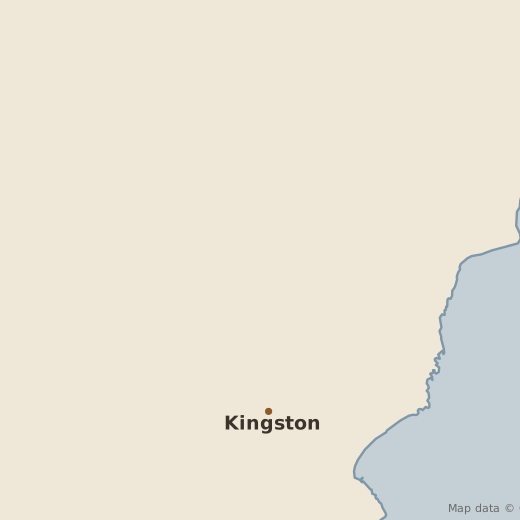
Kingston Beach is on the water, so the older pockets there are closer to salt than the 1.6 km measured from the centre of Kingston suggests. In those older houses a salted wall can read damp in a wet week even where no water is rising, so readings are taken at several heights.
Prices are on the cost page and the measuring method is on the about page. Nearby: South Hobart, Sandy Bay, Battery Point, West Hobart.
We cover Hobart and the surrounding suburbs, from the Georgian cottages of Battery Point to the post-war brick of Glenorchy and Moonah.
We come out, meter the walls, look at the ground levels and tell you what is causing it. You get that in writing before we quote any repair. The visit is $450 plus GST.