Telling them apart
In a cold climate both occur, they look similar on a wall, and the fixes have nothing in common.
Condensation or rising damp? Rising Damp Hobart treats this as the first question to settle, and in Hobart it genuinely is a question. A mild, humid winter with little sun favours condensation, and masonry built before damp courses can get rising damp. A house can have both at once.
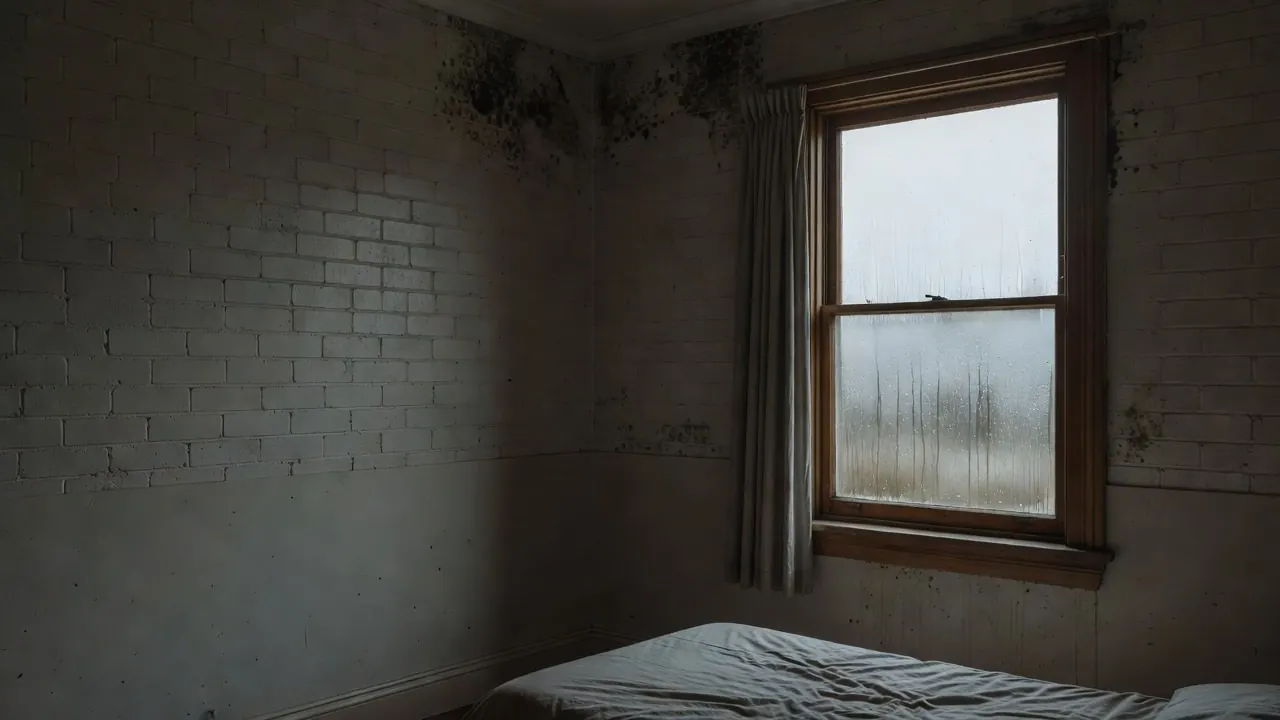
| Rising damp | Condensation | |
|---|---|---|
| Where on the wall | From the floor up, stopping at a tide mark | Cold spots — corners, behind furniture, around windows, often high |
| Salt | Usually present, white bloom or crystals | Absent |
| Mould | Less typical; salt inhibits it | Black spotted mould is the signature |
| The wall behind | Wet through when metered | Dry behind a wet surface |
| Season | Present year round, worse in the wet months | Winter, and worse in unventilated rooms |
| What changes it | Ground levels, drainage, a failed course | Heating, ventilation, drying clothes indoors, extraction |
Cold air holds less moisture than warm air. A Hobart house in July is heated in the evening, generating water vapour from cooking, showers and people, then cools overnight with the windows shut. The vapour condenses on the coldest surfaces it can find, which in an uninsulated solid masonry wall is a large proportion of the wall. Add drying laundry indoors — normal in a wet winter — and the moisture load rises further.
Condensation responds to ventilation and heat, and both are cheap to test. Ventilate the room properly for a fortnight, extract at the source in kitchen and bathroom, and stop drying washing inside. If the problem improves noticeably, it was condensation and no damp proof course would have helped. If nothing changes, or if there is salt and a level tide mark, that is when a meter earns its keep.
The reason this page exists is that it is a possible outcome. An assessment that concludes "this is condensation, ventilate the room" costs us a treatment job and saves an owner several thousand dollars. If that is what the meter shows, that is what we tell you.
We cover Hobart and the surrounding suburbs, from the Georgian cottages of Battery Point to the post-war brick of Glenorchy and Moonah.
We come out, meter the walls, look at the ground levels and tell you what is causing it. You get that in writing before we quote any repair. The visit is $450 plus GST.