The named fix
Installing a damp proof course into a wall that never had one, or replacing one that has failed.
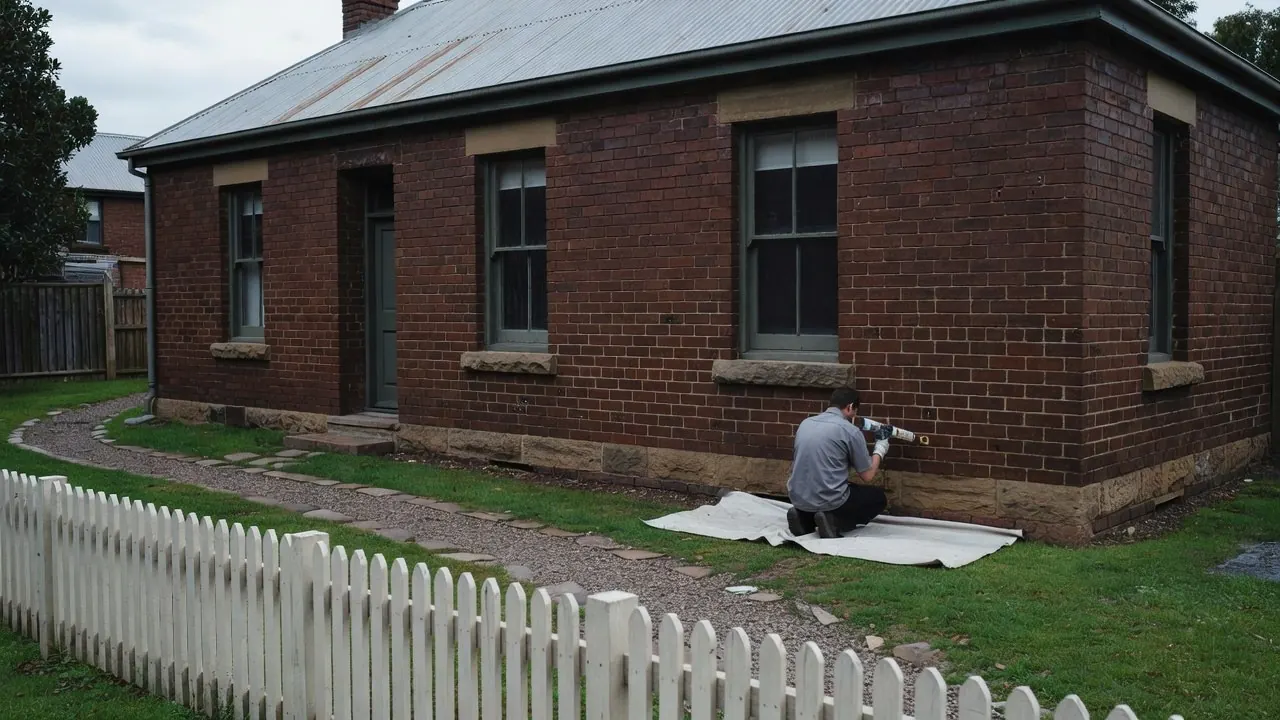
Chemical injection puts a water-repellent barrier into the masonry itself. A line of holes is drilled into a mortar course near the base of the wall, a silicone-based cream or fluid is injected, and it spreads through the pores and cures into a band the water cannot cross. Rising Damp Hobart does this work on southern Tasmanian masonry, brick and stone.
Holes at regular centres along a mortar joint, from one or both sides depending on wall thickness and access. On a rubble wall the spacing is adjusted as the driller finds what is actually in there.
Cream is placed into each hole and migrates into the surrounding masonry. Older fluid systems under pressure are still used on some substrates.
Holes are filled with a matching mortar. On visible sandstone or face brick this is a finishing job in its own right, so the mortar colour is agreed with you before any front elevation is drilled.
Usually a second, later visit. Salt-contaminated plaster comes off and is replaced with a salt-resistant render, once the wall has begun to dry.
Injection suits a wall that is genuinely wicking from the ground through a reasonably consistent material — solid brick above all. It works on sandstone but costs more, because porous stone absorbs more material and drilling is slower. It is least reliable in rubble walls, where voids and inconsistent mortar mean the injected band may not form continuously, and we say so rather than promise a result the wall cannot give.
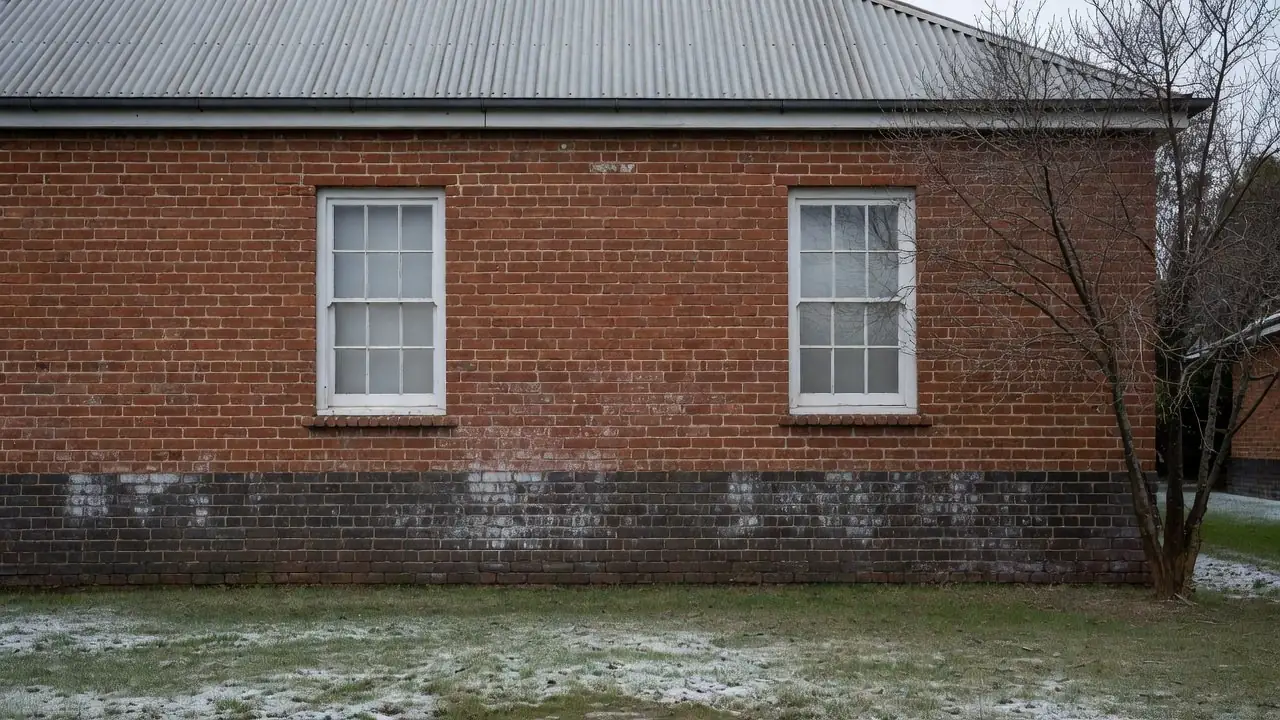
It is the wrong answer entirely where the problem is a bridge or a ground level. Installing a new course below a path that sits above your floor achieves nothing, because the water is entering above the line you just created.
Chemical injection of masonry is addressed directly in Heritage Tasmania's works guidance, and works to a registered place need Heritage Council approval — either a certificate of exemption where the impact is negligible, or a development application. Drilling a regular line of holes through a significant sandstone elevation is exactly the kind of work that needs the question asked first. See heritage-listed homes for how that process runs.
The barrier is effective as soon as it cures. The wall is not dry then — masonry gives moisture back slowly, and a thick sandstone wall that has been wet for a century can take six to twelve months to stabilise. Salt will keep appearing on the surface during that period, which is normal and is the reason replastering is deferred rather than done the same week.
We cover Hobart and the surrounding suburbs, from the Georgian cottages of Battery Point to the post-war brick of Glenorchy and Moonah.
We come out, meter the walls, look at the ground levels and tell you what is causing it. You get that in writing before we quote any repair. The visit is $450 plus GST.